
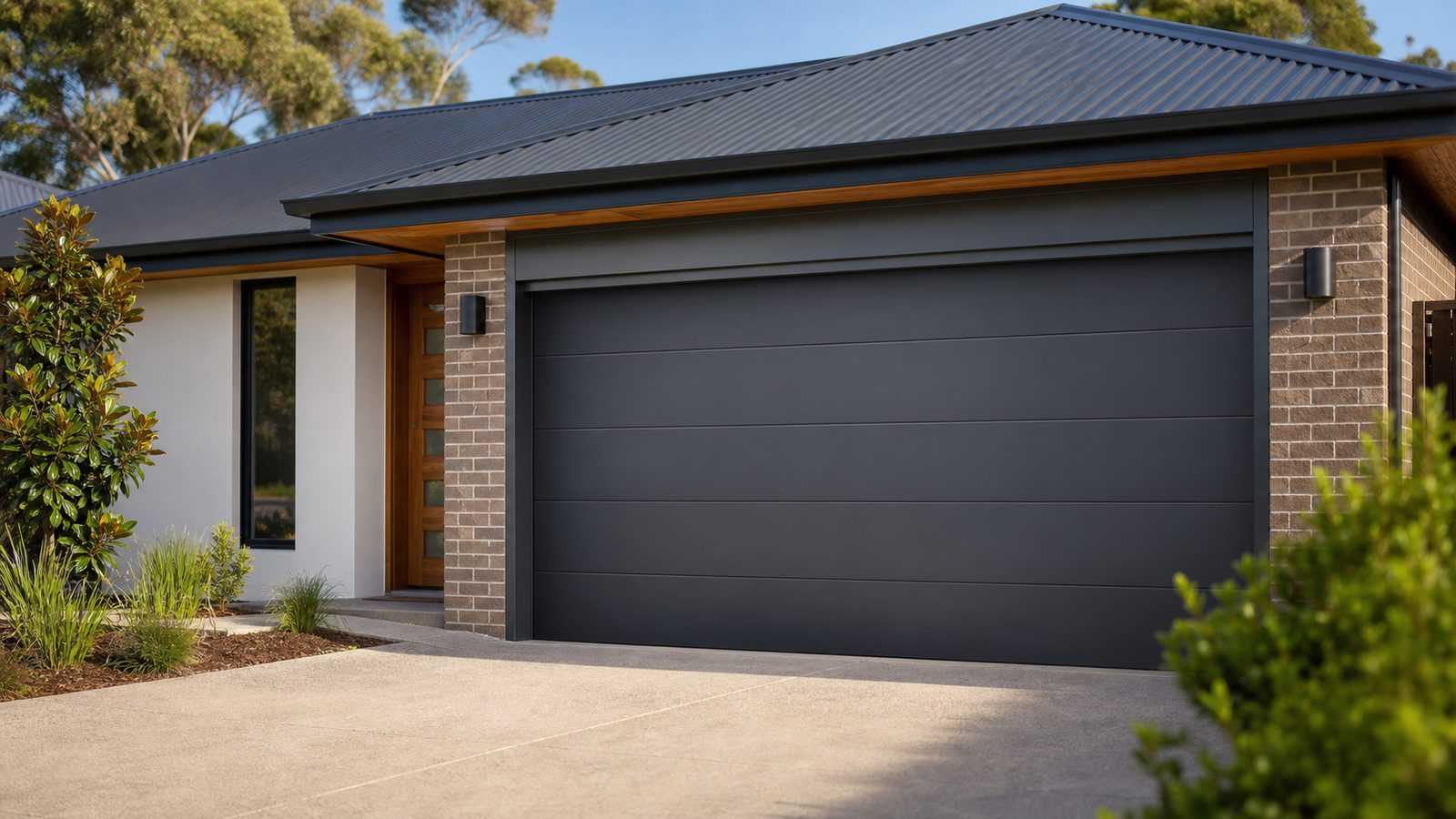
First separate a cosmetic mark from a movement problem
A crease across a garage door can look dramatic while the surrounding hardware remains intact. A smaller impact near a hinge or roller can be less obvious from the driveway and still change how the door travels. The useful first question is whether the damage is confined to the panel surface. That assessment needs the inside face, panel joints and supporting hardware as well as the view from outside. A photograph can start the conversation; it cannot establish that the door is safe to operate.
If a car, trailer or other heavy object has struck the door, leave it unused until it has been assessed. Keep people away from a hanging, crooked or partly open door. Do not run another cycle to produce a better video, disconnect the opener to see whether it feels heavy, or push a bent section back into line. A repair enquiry can describe what happened and the position in which the door stopped. Uncertainty about the mechanism is a reason to avoid disturbing it.
For a Cranbourne household with a car inside, explain the access problem when you call. For a garage facing a shared driveway, explain whether the damaged door projects into the vehicle route. These details affect the immediate arrangement even before the permanent repair is chosen. Move people and portable belongings away only where that can be done without approaching or passing beneath the door. Ask the attending technician to distinguish making the opening secure from completing the panel repair, because the two tasks may need different parts and visits.
Know whether you have sections or a continuous curtain
A sectional door is made from horizontal sections joined so that they can change angle as the door travels. A roller door uses a curtain that coils above the opening. Calling both of them a panel door can produce an unhelpful telephone estimate: replacing a section is a different proposition from repairing or replacing a roller curtain. Send a whole-door photograph and describe whether the door normally travels along ceiling tracks or rolls into a coil.
On a sectional door, identify the damaged area in ordinary language: lowest section beside the floor, middle section, or top section where the opener connects. Do not loosen any attachment to find a part number. A safe photograph of an existing label or old installation paperwork is enough to begin identifying the product. The door brand may differ from the opener brand, so a motor label alone does not establish which replacement section will fit.
B&D explains that individual sectional panels can sometimes be replaced, but other damage and the door's construction affect that option. Treat this as a possibility to investigate, not an assurance that every dent can be resolved with one new section. If the door is a roller type, ask for a curtain-specific assessment instead of trying to translate a sectional repair quote. The roller-door service page provides the appropriate starting point for that conversation.
Matching a section involves more than choosing the colour
A replacement section must belong to a compatible door system. Ask the supplier to confirm the profile, section height, joint design, construction and attachment arrangement against the actual door. A similar-looking panel in a brochure is not sufficient evidence of compatibility. When a product has changed over time, the quote should identify the proposed section and explain how the match was established. Request this before accepting an order that depends on a photograph alone.
Appearance deserves a separate decision. A newly supplied section may look different beside weathered sections even when it carries the same colour name. Texture, gloss, embossing and the direction of daylight can make that difference more visible. On a street-facing Cranbourne garage, look at the door from the driveway and the footpath as well as close up. Tell the supplier whether a visible mismatch would be acceptable in exchange for retaining the rest of the door.
Insulated and uninsulated constructions should not be treated as interchangeable cosmetic skins. Ask whether the replacement changes the section's construction or weight and what assessment of the complete door will accompany it. Do not accept a heavier section merely because its face looks right. The technician needs to determine whether the resulting assembly and operating system are suitable together. You do not need to calculate spring loads; you need the quote to state that matching and commissioning are part of the job.
Availability also needs a clear answer. A supplier may be checking current production, remaining stock or a manufacturer-supported alternative. Ask which applies and when they can confirm it. If the original profile is unavailable, request the practical alternatives in writing rather than accepting an indefinite wait for a panel that has not been located. A sourcing delay is a planning issue; it does not make an unsuitable substitute a better repair.
Compare three repair scopes against the same outcome
Cosmetic repair aims to improve the appearance of a surface that the technician considers suitable to retain. Discuss the likely finish before agreeing to it. The aim might be to make a shallow dent less noticeable rather than make the panel indistinguishable from new. Ask whether paint repair is included and what will remain visible in side lighting. Cosmetic work does not answer a separate question about distorted joints, damaged attachments or compromised operation.
Section replacement keeps the compatible parts of the existing door and changes the damaged section or sections. This can be a sensible route when the rest of the assembly is serviceable and matching parts can be supplied. It should include inspection of the associated hardware and a completed operating check, not simply delivery of a loose panel. Ask who will decide whether adjacent parts need replacement and how additional work will be approved if damage becomes clearer during the visit.
Complete replacement becomes relevant when compatible sections cannot be obtained, damage is widespread, or the retained assembly would leave unresolved problems. Compare it with the repair on a like-for-like basis. A new door price may include tracks and hardware that a panel-only figure excludes. Equally, a complete replacement proposal may contain an opener upgrade you did not request. Ask for the essential work and optional improvements to be shown separately.
Avoid deciding from a universal percentage rule. The appropriate choice depends on the actual repair, the condition of what remains, your appearance expectations and the support available for the existing system. Request a short explanation of what each option restores and what it leaves unchanged. That is more useful than being told that every door above a certain age must be replaced or every dent below a certain size is harmless.
Take photographs that answer the supplier’s questions
A useful photo set starts with a straight-on exterior view showing the entire opening. Add an angled view of the dent so the depth and the nearest joint are visible. If the inside can be viewed safely without moving the door or entering a hazardous area, include a wider view rather than only a close-up of the damaged skin. Let the technician request further images if the first set does not establish enough.
Keep the original photographs before any cosmetic work or cleaning changes the appearance. Note the date of the impact, what struck the door and whether it was moving at the time. Record what happened immediately afterwards from memory, including sounds or an unexpected stop. Do not recreate the incident. If an insurer, property owner or manager is involved, the same factual account helps everyone assess the same event without competing versions of the damage.
Measurements are useful only when they can be taken safely and are labelled as preliminary. Do not stand under the door or put a tape into its mechanism. A broad opening measurement from an accessible position may help a supplier identify the general size, but the installer should confirm ordering dimensions. Include your suburb and access constraints in the enquiry. A Cranbourne East property with a short driveway needs a different parking arrangement from a property with a clear apron, regardless of whether their doors look alike.
Put the finish, retained parts and handover in the quote
Ask the quote to name the door or section being supplied, the affected sections, the expected colour and texture match, and the hardware inspection included. Where the scope is provisional, ask exactly what remains to be checked. A transparent provisional item is easier to manage than a low initial total followed by unexplained additions. Clarify who removes the damaged material and how the opening will be left if the permanent part is not available at the first visit.
The retained opener needs its own decision. A panel repair does not automatically require a new motor, and a working motor is not proof that the impact caused no damage elsewhere. Ask whether the existing opener can remain with the repaired door, whether any connection components are affected, and what manufacturer-directed setup and safety checks will be completed. Keep optional remote, lighting or smart-control changes separate so the repair comparison remains understandable.
At handover, look at the repaired area in normal daylight and ask the technician to explain the completed work. Have them demonstrate normal operation and the relevant owner instructions for the actual model. Discuss any remaining cosmetic difference while the scope is fresh in everyone's mind. Keep the part identification, invoice, photographs and care instructions together. If the repair leaves any limitation, such as an unavailable matching finish, get that recorded rather than relying on a verbal comment.
For a home that will be sold or rented later, this small record is useful even when no insurance claim is involved. It shows what was changed and gives the next service technician a starting point. It also stops a future owner from assuming that a new bottom section means the entire door and opener were replaced. Ask about the support applying to the new work without treating it as a fresh warranty on every retained part.