
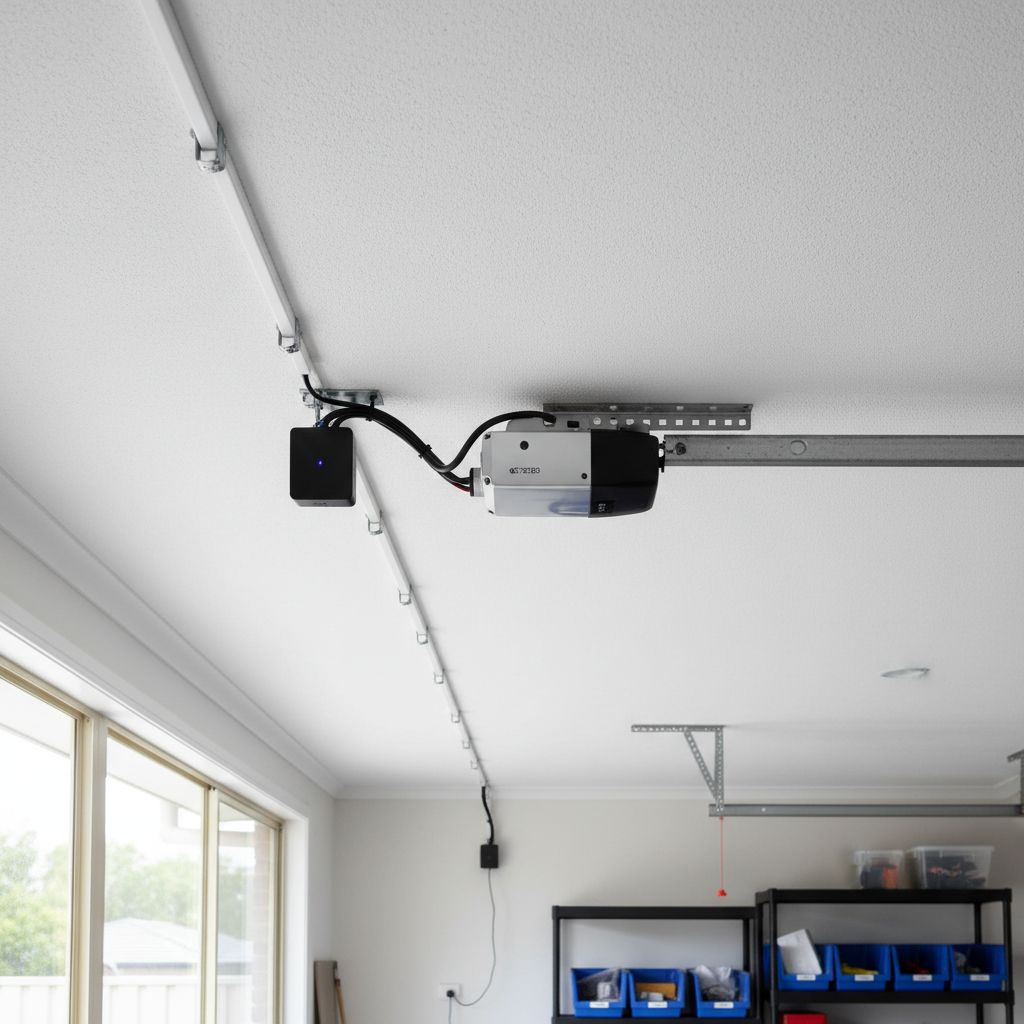
Describe the event rather than calling the whole door noisy
The most useful description connects a sound to a point in the door's movement. Does it begin with a click, continue as a steady hum, repeat as each section travels, or occur as a single knock near the end? Does it happen while opening, closing or both? Write down what you already hear during ordinary safe use. You do not need technical vocabulary: a brief description of the sequence is more helpful than guessing which part is defective.
A sudden new bang, scraping sound, uneven movement or visible damage needs a repair assessment before a quietness upgrade. Stop using a door that appears unsafe. Do not repeatedly cycle it to capture the noise, remove covers while it operates or pull the release to create a comparison. A sound recording is useful only when it can be made during otherwise safe normal operation from outside the moving area.
B&D's door repair and maintenance guidance treats rattling, squeaking and poor running as reasons to review the door's condition. That is a useful starting point before choosing a different opener. A motor purchase should follow an understanding of the problem, not substitute for it. If the sound has changed recently, tell the technician when it began and whether another event, such as impact or building work, preceded it.
For a Cranbourne household with early departures, describe the actual disturbance: a person waking in an adjoining bedroom, a desk vibrating or a rattle heard outside. The relevant outcome is not necessarily a quieter sound beside the motor. The assessment needs to include the room and time-of-use problem you want resolved, without requiring a technician to attend during sleeping hours.
Listen at the affected room as well as inside the garage
Noise at the source and noise where it causes trouble can be different. A motor may sound modest in the garage while vibration is noticeable in a room connected to its supports. A rattle in the bedroom may also come from an object responding to the door's movement rather than from the motor alone. Explain which room is affected and ask for the assessment to consider both locations.
A useful household observation is to have one adult remain in a safe viewing position near the normal control and another listen in the affected room during a normal cycle of a sound door. Note the same sequence of events from both places. Do not touch the moving door, tracks, supports or opener to feel vibration. If the door is not safe to operate, rely on previous observations until it is assessed.
Keep the room conditions reasonably consistent when comparing before and after. An open window, running fan or moved furniture can change what is heard. You do not need laboratory conditions, but a comparison made with the bedroom window shut before the work and open afterwards is hard to interpret. Record whether the internal garage-to-house door was open, which room was used and what part of the cycle was most noticeable.
In a home beside a shared wall or driveway, distinguish sound heard inside your room from sound heard at the boundary. These may call for different investigations. Avoid assuming your neighbour hears exactly what you hear upstairs. If a neighbour has raised a concern, ask for the time and character of the sound and provide that description to the technician. A factual account helps focus the assessment without blaming a particular component in advance.
Separate the moving door, the drive and the building
Ask the technician to explain the likely sources they identify. The door assembly includes sections or curtain, guides or tracks, joints and supporting hardware. The drive includes the opener and its transmission. The building includes the surfaces and structure receiving the supports. A proposed repair should say which part of that system it addresses. The explanation need not be highly technical, but it should connect the proposed work to the noise you described.
A repeated rattle associated with travel may require a different response from a steady drive sound. A knock at the final position may be different again. These are observation categories, not diagnoses you can make from a phone recording. Ask what the technician found on the actual installation and whether the change is aimed at restoring correct operation, reducing ordinary operating sound or both. That distinction affects what a reasonable result looks like.
Building transmission can remain relevant even after the mechanism is operating properly. B&D's CAD4 owner and installation manual discusses vibration reaching living quarters and a model-specific isolation option. This does not make an isolation kit suitable for every opener. It supports asking whether the installed system has an approved approach to the problem and what assessment of the supports is needed.
Do not loosen mountings, pack brackets with improvised foam or add rubber pieces around structural attachments. The support arrangement has to remain suitable for the equipment. Ask the installer to identify manufacturer-supported measures and explain whether a building specialist is needed for the remaining transmission path. A reduction in sound should not depend on changing the mounting arrangement without a supported design.
Choose a quieter opener only after defining what it can change
When considering an opener replacement, ask the supplier which part of the present sound is expected to improve. A change in drive design may affect drive noise, but it cannot be assumed to remove panel rattle or every vibration path through the building. Request a model-specific explanation and any relevant manufacturer information. Keep a claim about the product's sound separate from a promise about the room in your home.
Demonstrations and recordings have limits. A showroom unit may operate a different door on a different support structure, and phone videos alter how sounds are captured and replayed. Use them to understand the character of a product, not as proof that your bedroom will become silent. Ask whether the supplier can assess the existing door first and explain the expected residual sounds after the proposed upgrade.
Check that the new opener is suitable for the door and installation space. Quietness is only one selection criterion. The rail, supports, controls, manual-release access and any backup requirement still need to be addressed. If the proposal includes replacing a sound door as well as the opener, ask why both are necessary. An itemised explanation helps distinguish essential compatibility work from an optional change in appearance or features.
Do not accept an age-based replacement rule as the whole diagnosis. An older opener may deserve replacement for identified condition or support reasons, but its age alone does not locate the noise that wakes someone upstairs. Ask for the observed fault, the viable repair options and the expected effect of each. The motor-replacement enquiry can then focus on a defined problem rather than a broad request for the quietest product.
Do not confuse insulation, sealing and operating noise
An insulated door, a better perimeter seal and a quieter drive address different aspects of the garage environment. A product that reduces sound passing through the closed door is not automatically a solution to sound generated while the door moves. Ask the supplier which noise claim is being made and under what conditions. This prevents a comfort upgrade from being sold as an answer to a mechanism problem it has not been shown to address.
If you are considering adding material to an existing door, ask the door manufacturer or installer about compatibility before proceeding. Added weight and attachments need assessment as part of the complete system. Do not glue foam, acoustic panels or other material onto moving sections in an attempt to damp a rattle. The suitability of a purpose-designed insulated door does not establish that a homemade retrofit is safe or effective.
Weather seals can also change the way a door meets the opening. Describe any recent seal replacement or threshold work when discussing a new closing noise. The technician needs to know what changed before deciding that the motor or panel assembly is at fault. Do not trim seals or adjust the closing force based on a noise guess. If water entry is the main issue, keep that in the separate weather-sealing assessment so both problems receive the right attention.
Inside the bedroom, secure or relocate ordinary loose belongings only where that is safe and unrelated to the mechanism. A picture or cupboard item rattling in sympathy may be simple to identify, but that observation does not excuse an abnormal door. Record what remains after obvious room objects are addressed. It helps the technician distinguish the source event from secondary sounds without treating the whole building as a garage-door component.
Agree on the listening check before the work
A useful acceptance check is tied to the complaint. Specify the room, the ordinary door operation and the sound you want reduced. Ask the provider to describe the expected result in plain language: for example, addressing a diagnosed rattle while normal motor sound remains. Avoid a vague promise of silent operation. If a formal acoustic result is required, agree on appropriate specialist measurement rather than treating a phone app as a calibrated assessment.
After the work, compare under the same ordinary conditions and from the same listening positions, once the installer has confirmed the door is ready. Ask them to demonstrate normal operation and explain any remaining sound. If the original event persists, point to the part of the cycle where it occurs rather than saying everything is unchanged. This gives the provider something specific to investigate and helps avoid replacing another component without a clear reason.
Keep the written scope, product details and the observations used for the comparison. Ask which maintenance instructions apply to the new or retained parts and which changes would justify another service request. A familiar steady operating sound is different from a new bang or a door that begins to travel unevenly. The household should know that a quieter result does not remove the need to respond to a later fault.
For a busy Casey household, the enquiry can be short: suburb, door type, opener model if known, room affected and the point in travel that causes the disturbance. Include whether the sound is longstanding or new. That information gives the technician a useful assessment brief and keeps the discussion centred on the home rather than a product ranking that cannot account for its structure.